Description
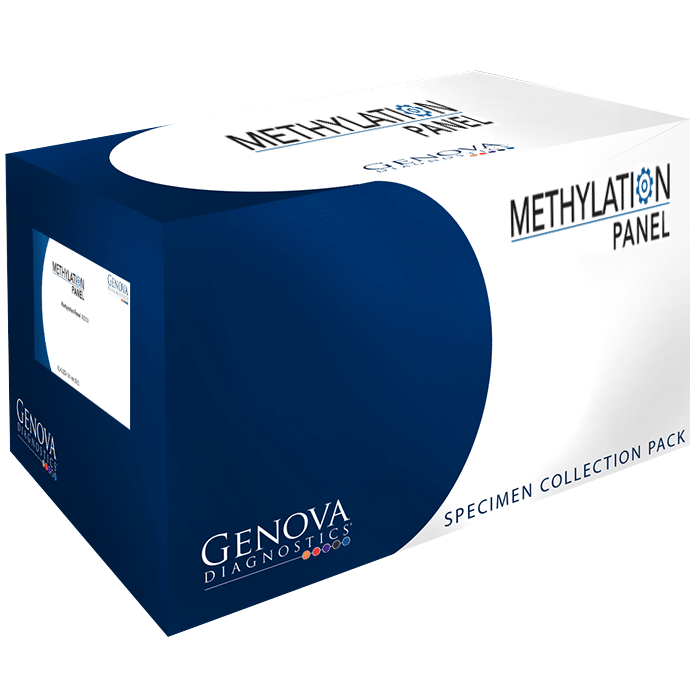
Methylation Panel Plus Genomics Blood and Saliva Test
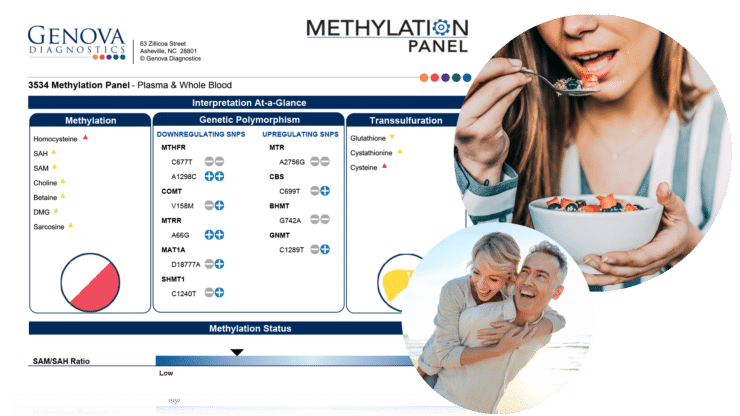
The Methylation Panel offers insight into the biochemical methylation pathway. Methylation metabolites are measured in plasma and genetic single nucleotide polymorphisms (SNPs) are analyzed via buccal swab.
Methylation is important for detoxification, mood, cardiovascular health, and energy production.
A Personalized Approach to Healthy Aging
The Methylation Panel is an innovative test designed to offer insight into the critical biochemical methylation pathway. Methylation metabolites are measured in plasma, and genetic single nucleotide polymorphisms (SNPs) are analyzed via buccal swab. Patient results are synthesized on a front-page Interpretation-at-a-Glance (IAAG) graphic for quick methylation status assessment. Within the report, results are shown in a methylation pathway graphic to provide a clear understanding of the biochemistry involved.
What is Methylation?
Methylation is a chemical process that happens billions of times per second in every cell of the body. Methyl groups are transferred and donated between many different molecules which change their structure and function. Methyl groups act like billions of switches which turn genes on or off, help regulate mood, detoxify hormones, produce energy, and promote healthy aging.
Vitamins, minerals, and amino acids from the diet are needed to keep this process running smoothly. There are also genetic factors and oxidative stressors which can affect how well this pathway works.
Why is Methylation important?
- Methylation is needed to create DNA and RNA and regulate gene expression.
- It helps make creatine, which is needed for skeletal muscle contraction.
- Methylation is involved in basic energy production, fat metabolism, immune responses, vascular health, and cell membrane repair.
- It produces and metabolizes neurotransmitters to regulate mood.
- Methylation also works to neutralize toxins and hormones.
How are the results of the Methylation Panel helpful?
The Methylation Panel can uncover needs for nutritional support such as amino acids, vitamins, and minerals. Knowing this can help guide dietary and nutraceutical treatment plans. Additionally, knowing genetic predispositions can help focus supplementation to override potential methylation defects.
View Sample Report
Markers Measured
Methylation Panel Plus Genomics Blood and Saliva Test markers measured:
Ratios
- Methylation Index (SAM/SAH Ratio)
- Methylation Balance Ratio
- Met/Sulf Balance Ratio
- Betaine/Choline Ratio
Methyl Group Donors
- S-adenosylmethionine (SAM)
- Methionine
- Choline
- Betaine
- Serine
Methyl Group Metabolites
- S-adenosylhomocysteine (SAH)
- Homocysteine
- Dimethylglycine (DMG)
- Sarcosine
- Glycine
Transsulfration Metabolites
- Cystathionine
- Cyst(e)ine
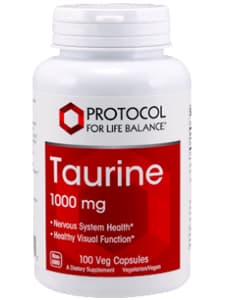
- Taurine
- Glutathione
Genetic Markers
- BHMT G742A (Betaine-homocysteine S-methyltransferase)
- CBS C699T (Cystathionine beta-synthase)
- COMT V158M (Catechol-O-methyltransferase)
- GNMT C1289T (Glycine N-methyltransferase)
- MAT1A D18777A (Methionine adenosyltransferase)
- MTHFR A1298C (5,10-methylenetetrahydrofolate reductase)
- MTHFR C677T (5,10-methylenetetrahydrofolate reductase)
- MTR A2756G (Methionine synthase)
- MTRR A66G (Methionine synthase reductase)
- SHMT1 C1240T (Serine hydroxymethyltransferase 1)
Symptoms
Symptoms of Methylation Defects
Because of its all-encompassing role in basic human physiology, the range of symptoms associated with methylation defects is broad. The Methylation Panel can offer insight in patients with:
- questionable detoxification (patients who take hormone therapy, drink alcohol, or have toxin exposure)
- cancer risk
- cardiovascular disease (non-coronary atherosclerosis, hypertension, coronary artery disease)
- psychiatric and mood disorders (schizophrenia, autism, bipolar disorder, anxiety, depression)
- neurologic disorders (Parkinson’s disease, cognitive decline)
- chronic fatigue
About Test
About Methylation Panel Plus Genomics Blood and Saliva Test
Test Preparation and Reminders
Please make sure ALL information is entered onto the test requisition form included in the kit and all required clinician and patient signatures are completed (missing information may cause a delay in testing and/or interpretation).
- Be sure to follow the specimen collection instructions.
- If the use of cold pack is required, freeze bag containing cold pack for minimum of 4-6 hours before shipping.
- Provide all required information including signature on requisition form. (For non-licensed clinicians, signature is not required.)
- Make sure collection containers are securely closed and placed in the appropriate bag/box.
- Check whether the box has prepaid FedEx, UPS or US Mail postage.
- If you have any questions, please call Evexia Client Services at 888-852-2723.
View Collection Instructions